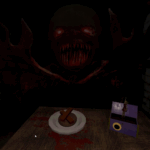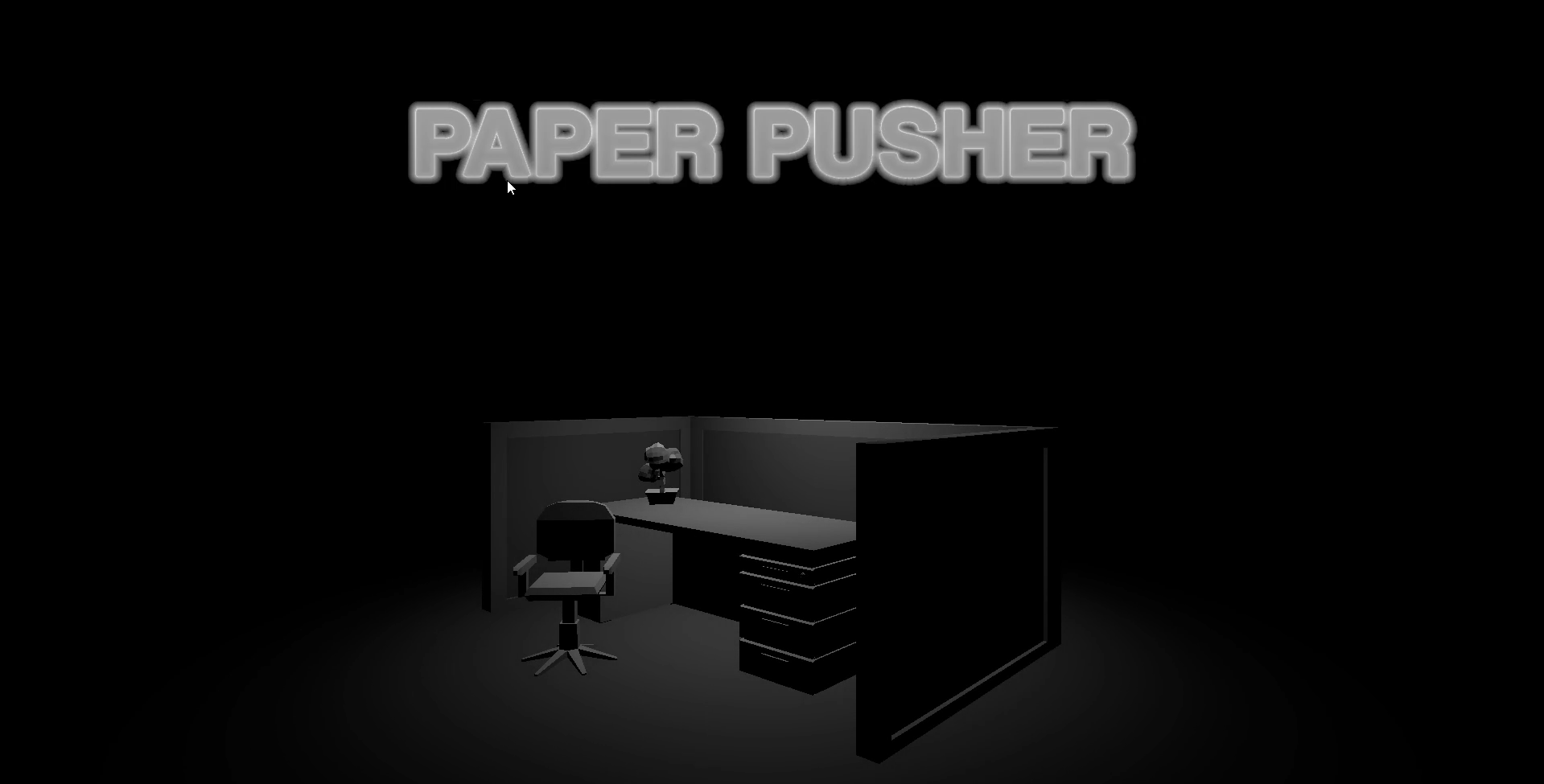
If you’ve ever felt like your day job was slowly eating your soul, my experience when I used to work in bureaucracy ;),“Paper Pusher” might hit a little too close to home.
Created by Phillip Hubbard, this indie horror game throws you into the shoes of a low-tier bureaucrat who makes decisions with life-and-death consequences, all from behind a desk.
This noir style, bureaucratic simulation sounds dry, right? No. It’s a psychological mirror wrapped in government red tape. And, if you want more indie horror reviews, checkout my review on Hope Deferred here!
Overview

At its core, “Paper Pusher” is a choice-driven story experience. The gameplay is deceptively simple: review cases, decide who gets a second chance and who gets the metaphorical axe, and x-mark files.
However, under that surface lies something meaner, deeper, and smarter. You never know which click has a consequence in this simulation.
You’re pushing papers and marking people to be eliminated, with just the casual flick of a pen. The eerie part? Not all choices are easy.
The Story
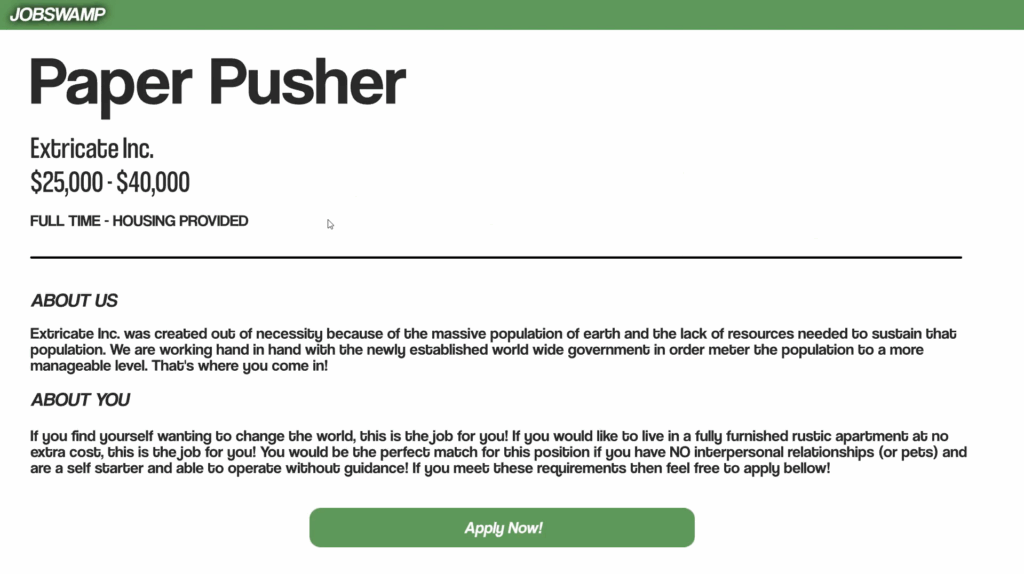
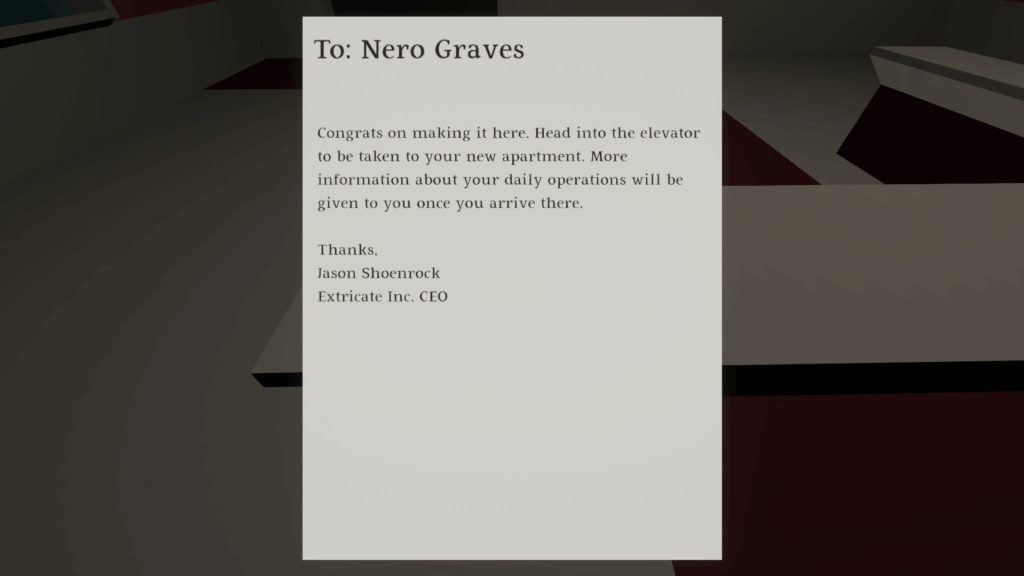
You are playing a character that apparently needs a job and has fortunately, maybe, found a position. Seemingly needing the money, we as the player accepts and begins our journey into the bureaucratic noir simulation.
Spoilers
The story splits based on how you treat some applicants to the worldwide government’s “Extrication.” You’ll face profiles of criminals, geniuses, and everything in between. Some want out while others just don’t care. You decide who continues.
First playthrough? You might act with empathy. Second time? Cold logic. You’ll start to question yourself. Why did I let that narcissistic comedian through? Why did I mark the mentally ill but spare the AI scientist?
Endings range from existential dread to dark comedy. “Betrayal” leaves a bitter aftertaste. “Leave” stings in silence. And that final screen? Unexpected and kind of great.
It forces you to reflect on the game and on your own logic, biases, and ethics. Brutal honesty.
Spoilers End
The Gameplay
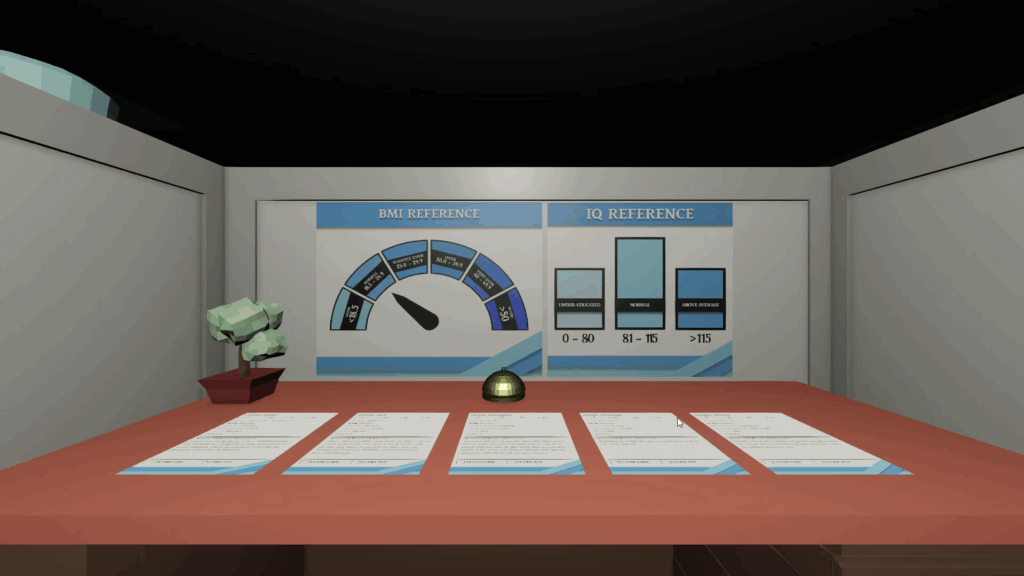
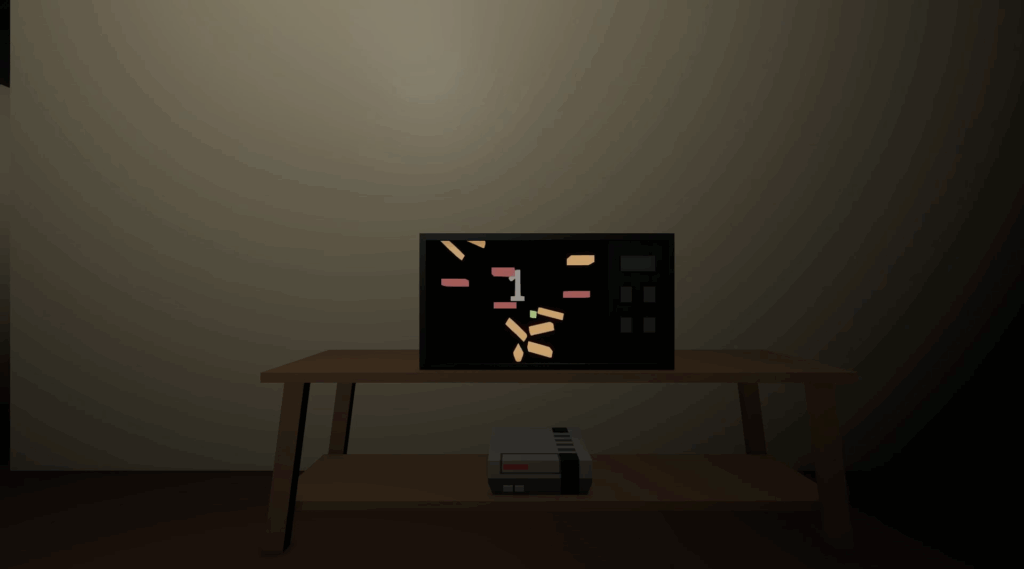
Mechanics are minimal and effective. Click through files, read profiles, and decide. You can also play a surprisingly fun minigame that kind of keeps you trying to get higher scores. That’s it.
Yet it never feels lazy or shallow. Every profile carries weight, and the deeper you go, the more the system seems to watch you.
Minute decisions reshape the story. Right or wrong doesn’t matter all that much. It’s about what kind of judge you are. The game doesn’t handhold. Sometimes choices feel like stabs in the dark, which adds tension.
By round two or more, you realize how many paths were left untouched. And when you take that path, your own hypocrisy gets dragged into the light. It’s a game that wants you to reflect on yourself.
Game Guide
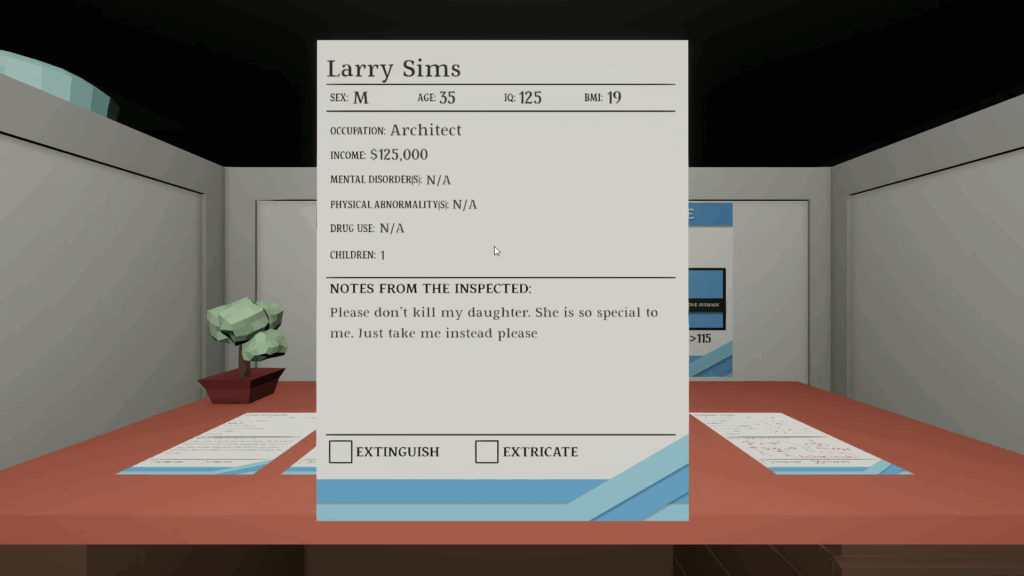
- Pay attention to small details, phrasing matters, and story beat through notes.
- Don’t trust your gut. Or do. Either way, you’ll regret it.
- Don’t skip the different paths to get different playthroughs.
Graphics and Audio

“Paper Pusher” goes for a clean, clinical noir design. Think cold office walls, dim fluorescent lights, and stacks of case files. No frills, just function, and it works. The minimalism via the Unity Engine adds to the unease of this dystopian, noir simulation.
The audio design, though sparse, is clever. Background hums, the scratch of pens, the lingering silence, it’s all designed to remind you that something’s off. When it all hits, it gnaws at you.
No explosions or cinematic overtures. Just you, your conscience, and that pen.
Performance and Technical Aspects
Mostly solid. Loads quickly, runs smooth. A couple UI hiccups in long sessions and brief, small lags may occur but not immersion breaking. If anything, the mechanical stiffness adds to the game’s sterile vibe.
Wouldn’t mind a few more quality-of-life features like organizing your desk or adding minor changes to the apartment. Still, the focus stays on story tension, where it should be.
Length and Replayability
First run? Expect on average 45 minutes unless into exploring details like me. The branching story is integral.
Choices you skipped gnaw at you. What would’ve happened if you’d extricated the journalist? Or extinguished the perfectly no insane rich pyromaniac?
There are different endings that create a type of closure. But the real value comes from you, the gamer. Your decisions, your inconsistencies, your shifting sense of morality.
That’s what keeps you coming back. Not completionism, just plain curiosity.
Closing Thoughts
“Paper Pusher” is quiet chaos. It lures you in with monotony and then turns your own choices into weapons. This noir simulation makes you sit in the silence afterward.
It’s not perfect, as some parts are rough, a few choices land flat, but it’s memorable as hell. There’s a bit of critique to capitalism, shown not told, that is a nice touch too. It doesn’t matter if you’re entertained.
The game wants to know who you are when no one’s watching. When no one cares.
And maybe that’s the point. This simulation game is about digging deeper, beyond the profiles on paper, and into the moral compass and psychology of the gamer.
Play it more than once. You’d be surprised at what you learn about yourself.